<?xml version="1.0" encoding="utf-8"?><feed xmlns="http://www.w3.org/2005/Atom" xml:lang="en-US"><generator uri="https://jekyllrb.com/" version="4.4.1">Jekyll</generator><link href="https://www.micheledufresne.com/feed/index.xml" rel="self" type="application/atom+xml" /><link href="https://www.micheledufresne.com/" rel="alternate" type="text/html" hreflang="en-US" /><updated>2026-08-31T21:44:51-04:00</updated><id>https://www.micheledufresne.com/feed/index.xml</id><title type="html">Michèle Dufresne</title><subtitle>Michèle Dufresne is a former literacy specialist, best-selling children&apos;s book author, and co-author of the Literacy Footprints Guided Reading system. Teaching tips and resources for teaching children to read.</subtitle><author><name>Michèle Dufresne</name><email>ask-michele@pioneervalleybooks.com</email></author><entry><title type="html">Lesson Learned: Why We Wrote Phonics Storybooks</title><link href="https://www.micheledufresne.com/2023/10/18/lesson-learned-why-we-wrote-phonics-storybooks/" rel="alternate" type="text/html" title="Lesson Learned: Why We Wrote Phonics Storybooks" /><published>2023-10-18T16:54:44-04:00</published><updated>2023-10-18T16:54:44-04:00</updated><id>https://www.micheledufresne.com/2023/10/18/lesson-learned-why-we-wrote-phonics-storybooks</id><content type="html" xml:base="https://www.micheledufresne.com/2023/10/18/lesson-learned-why-we-wrote-phonics-storybooks/"><![CDATA[<p style="font-weight: 400;">A Pioneer Valley Books fan recently asked me about my decision to write decodable books. The fan recognized that in the past I had expressed the thinking that students learn best when their teacher reacts to their reading miscues in the moment during text reading and that I objected to using decodable text that was contrived and inauthentic.</p>
<p style="font-weight: 400;">Here is my response.</p>
<p></p>
<!--more-->
<p><span style="font-weight: 400;">Lesson learned! We should never say never when it comes to learning about the best ways to teach children! I have spent the last 18 months reviewing the science and observing children reading decodable text from many different publishers. I still object to using any text that is not meaningful, engaging, or natural sounding. But I did begin a journey to see if text could be both decodable and provide students with an engaging storyline and natural language structure.</span></p>
<p>If you have seen any of the new books from our Phonics Storybooks collection, I think you will agree it can be done. The books follow a systematic scope and sequence but also feature memorable characters/storylines and engaging informational text. As I developed and wrote these books, I piloted them extensively with children learning to read, and the results were very favorable.</p>
<p>I continue to think that using decodable books will not be enough to build a strong reading processing system. I know that students need natural-language texts in order to develop the flexibility and problem-solving skills that research shows successful readers need.</p>
<p>Regarding my statement from several years ago that students learn best when their teacher reacts to their reading miscues in the moment during text reading: I continue to believe that prompting and scaffolding as students read is essential in providing targeted instruction to children learning to read. Many novice teachers are entering our classrooms, and I worry that they are not being trained in how to observe and respond to student mistakes and will not recognize partial errors that can be used to provide effective instruction.</p>
<p>At Pioneer Valley Books, we are fully committed to providing teachers with the best resources that work for children, and we are open to evolving our thinking based on the latest research and analysis. We will be working with an independent research organization to design studies that analyze the effectiveness of new PVB materials. And we will continue to study and observe children in order to develop cutting-edge materials that will deliver the best possible literacy instruction.</p>]]></content><author><name>Michèle Dufresne</name><email>ask-michele@pioneervalleybooks.com</email></author><category term="new-at-pioneer-valley-books" /><summary type="html"><![CDATA[A Pioneer Valley Books fan recently asked me about my decision to write decodable books. The fan recognized that in the past I had expressed the thinking that students learn best when their teacher reacts to their reading miscues in the moment during text reading and that I objected to using decodable text that was contrived and inauthentic. Here is my response.]]></summary><media:thumbnail xmlns:media="http://search.yahoo.com/mrss/" url="https://www.micheledufresne.com/assets/images/posts/2023/10/Oct23-PS-blog-header.png" /><media:content medium="image" url="https://www.micheledufresne.com/assets/images/posts/2023/10/Oct23-PS-blog-header.png" xmlns:media="http://search.yahoo.com/mrss/" /></entry><entry><title type="html">Teaching Tip: Benchmarking Assessments</title><link href="https://www.micheledufresne.com/2023/10/03/teaching-tip-benchmarking-assessments/" rel="alternate" type="text/html" title="Teaching Tip: Benchmarking Assessments" /><published>2023-10-03T11:23:11-04:00</published><updated>2023-10-03T11:23:11-04:00</updated><id>https://www.micheledufresne.com/2023/10/03/teaching-tip-benchmarking-assessments</id><content type="html" xml:base="https://www.micheledufresne.com/2023/10/03/teaching-tip-benchmarking-assessments/"><![CDATA[<p style="font-weight: 400;">We recommend using a robust benchmarking assessment that looks at students’ progress three times a year: early in the school year, in the middle of the year, and at the end of the school year. We also recommend short progress monitoring check-ins on students’ literacy learning each week or every other week. With students who are struggling to learn to read, you will want to check in even more often.</p>
<p style="font-weight: 400;">For your benchmarking assessment needs, Pioneer Valley Books offers a number of options. We are currently working on a digital phonics assessment that can be administered at the beginning of the year and at the midterm and end-of-year assessment times. This assessment will focus on how students have progressed along the phonics continuum, as well as how their decoding and encoding skills have developed.</p>
<!--more-->
<p style="font-weight: 400;">Another benchmarking assessment option is <a href="https://pioneervalleybooks.com/pages/literacy-footprints-guided-reading-assessment-kit"><strong>The Literacy Footprints Guided Reading Assessment</strong></a>. In this assessment, students read short books and are evaluated on their progress in decoding, fluency, and comprehension. They then do a quick word study/phonics assessment and are evaluated on their decoding skills. They also write a short passage and are evaluated on their spelling and other writing criteria.</p>
<p style="font-weight: 400;">Weekly progress monitoring assessments can be short and simple and should focus on decoding and encoding skills, along with how well students are controlling the phonic elements currently being taught. Here are some ways to get a fast and easy read on student progress:</p>
<ol>
<li>Listen to a student read a few pages from a book you have used for instruction and take a running record or make note of mistakes.</li>
<li>Ask students to write a few words that reflect the phonics skill you have taught that week.</li>
<li>Dictate a sentence that contains phonic elements and sight words you have been working on.</li>
</ol>]]></content><author><name>Michèle Dufresne</name><email>ask-michele@pioneervalleybooks.com</email></author><category term="teaching-tips" /><category term="assessments" /><summary type="html"><![CDATA[We recommend using a robust benchmarking assessment that looks at students’ progress three times a year: early in the school year, in the middle of the year, and at the end of the school year. We also recommend short progress monitoring check-ins on students’ literacy learning each week or every other week. With students who are struggling to learn to read, you will want to check in even more often. For your benchmarking assessment needs, Pioneer Valley Books offers a number of options. We are currently working on a digital phonics assessment that can be administered at the beginning of the year and at the midterm and end-of-year assessment times. This assessment will focus on how students have progressed along the phonics continuum, as well as how their decoding and encoding skills have developed.]]></summary><media:thumbnail xmlns:media="http://search.yahoo.com/mrss/" url="https://www.micheledufresne.com/assets/images/posts/2023/10/TeachingTip-Blog-092523.png" /><media:content medium="image" url="https://www.micheledufresne.com/assets/images/posts/2023/10/TeachingTip-Blog-092523.png" xmlns:media="http://search.yahoo.com/mrss/" /></entry><entry><title type="html">Teaching Tip: What makes a good decodable book</title><link href="https://www.micheledufresne.com/2023/07/19/teaching-tip-what-makes-a-good-decodable-book/" rel="alternate" type="text/html" title="Teaching Tip: What makes a good decodable book" /><published>2023-07-19T15:17:42-04:00</published><updated>2023-07-19T15:17:42-04:00</updated><id>https://www.micheledufresne.com/2023/07/19/teaching-tip-what-makes-a-good-decodable-book</id><content type="html" xml:base="https://www.micheledufresne.com/2023/07/19/teaching-tip-what-makes-a-good-decodable-book/"><![CDATA[<p>Decodable books have been used for reading instruction for years. They can be very useful for providing students with opportunities to practice new phonics skills. But many teachers resist using them because of a variety of flaws in some of the decodable books on the market. A great number of decodable books have silly, nonsensical stories that are poorly illustrated. They also often have awkward or strange language structures. This makes reading the books very challenging for novice readers, especially English language learners.</p>
<p>The good news is that with the renewed interest in decodable books, much better options are now available.</p>
<p>What makes a quality decodable book? Here are some criteria for selecting a decodable book to use with your students:</p>
<p></p>
<!--more-->
<ol>
<li>
<strong>Storyline.</strong> Does the book have a meaningful story? Are the characters interesting? Will students enjoy reading about the setting, problem, and solution? If the book is nonfiction, is the information accurate and will the topic interest your students?</li>
<li>
<strong>Language Structure.</strong> The language structure in the book should sound like natural language.</li>
<li>
<strong>Illustrations.</strong> Children deserve books with quality illustrations. While your goal is to provide opportunities for practicing phonics skills, you do not want to turn students off from their reading experiences. The books should have vibrant colors, diverse characters, and pictures that are appealing to the age group you are working with.</li>
<li>
<strong>Appropriate Complexity.</strong> Leveled books are getting a bad rap from some people these days, but what they offer is a clear progression that helps teachers move students from simple to more complex text. Decodable books are usually not leveled, but they should have the appropriate complexity for the students you are working with. If a student can’t read the book with an accuracy rate of 90% or greater (with some support from you), it is too hard! Students will quickly get discouraged and shut down if they struggle with all the words. Also important is the number of sight words in the book. Sight words should be introduced carefully and be repeated in future books to build automaticity.</li>
<li>
<strong>Learning Opportunity.</strong> Does the decodable book provide opportunities to practice new skills AND review old skills? The text should also include plenty of the sight words you have been teaching.</li>
</ol>
<p>Decodable books are very useful. The goal is to choose books that teach students how to read while cultivating a love of reading at the same time so your students become lifelong readers who can’t wait to pick up another book!</p>
<p>Looking for quality decodable books? Check out our wonderful <strong><a title="Phonics Storybooks" href="https://pioneervalleybooks.com/collections/pioneer-valley-phonics-storybooks" target="_blank" rel="noopener noreferrer">Phonics Storybooks sets</a></strong>, a collection of decodable books for K–2 readers and older students who need more support in learning to decode.</p>
<p> </p>
<p> </p>]]></content><author><name>Michèle Dufresne</name><email>ask-michele@pioneervalleybooks.com</email></author><category term="teaching-tips" /><category term="decodable-books" /><summary type="html"><![CDATA[Decodable books have been used for reading instruction for years. They can be very useful for providing students with opportunities to practice new phonics skills. But many teachers resist using them because of a variety of flaws in some of the decodable books on the market. A great number of decodable books have silly, nonsensical stories that are poorly illustrated. They also often have awkward or strange language structures. This makes reading the books very challenging for novice readers, especially English language learners. The good news is that with the renewed interest in decodable books, much better options are now available. What makes a quality decodable book? Here are some criteria for selecting a decodable book to use with your students:]]></summary><media:thumbnail xmlns:media="http://search.yahoo.com/mrss/" url="https://www.micheledufresne.com/assets/images/posts/2023/07/Teaching-Tip-Blog-071923.jpg" /><media:content medium="image" url="https://www.micheledufresne.com/assets/images/posts/2023/07/Teaching-Tip-Blog-071923.jpg" xmlns:media="http://search.yahoo.com/mrss/" /></entry><entry><title type="html">Teaching Tip: Making Words: an Update</title><link href="https://www.micheledufresne.com/2023/04/12/teaching-tip-making-words-an-update/" rel="alternate" type="text/html" title="Teaching Tip: Making Words: an Update" /><published>2023-04-12T19:04:04-04:00</published><updated>2023-04-12T19:04:04-04:00</updated><id>https://www.micheledufresne.com/2023/04/12/teaching-tip-making-words-an-update</id><content type="html" xml:base="https://www.micheledufresne.com/2023/04/12/teaching-tip-making-words-an-update/"><![CDATA[<p>Making Words is an engaging word building activity that helps link your students’ knowledge of letter-sound relationships with phonemic awareness.</p>
<p>If you have used this activity in the past, you know how much students learn from it, but I now recommend some changes in how the activity is done so students can practice both encoding and decoding skills. Going back and forth between encoding and decoding helps to create flexible word solvers and solidifies visual and auditory synchrony.</p>
<p></p>
<!--more-->
<p>Watch <strong><a href="https://youtu.be/j0PPFjjO_W4" target="_blank" rel="noopener noreferrer">this video</a></strong> to see me explain the newly updated Making Words procedure.</p>
<p>Here are some suggested Making Words lessons you can use with some of our new Phonics Storybooks!</p>
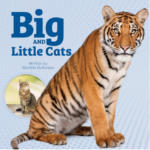
<p><strong><img class="alignleft" src="/assets/images/posts/2023/04/tiger-150x150.png" alt="Big and Little Cats" width="150" height="150" srcset="/assets/images/posts/2023/04/tiger-150x150.png 150w, /assets/images/posts/2023/04/tiger-300x297.png 300w, /assets/images/posts/2023/04/tiger-230x228.png 230w" sizes="(max-width: 150px) 100vw, 150px" loading="lazy" decoding="async">Phonics Focus:</strong> Short Vowels <em>a</em> and <em>i</em></p>
<p>Have students remove the following letters from their trays: <em>a</em>, <em>b</em>,<em> f</em>,<em> g</em>,<em> i</em>,<em> p</em>, and <em>r</em><em>.</em></p>
<ul>
<li>
<em>Make the word:</em> pig.</li>
<li>
<em>Change the</em> p <em>to </em>b <em>and read the word:</em> big.</li>
<li>
<em>Make the word:</em> bag.</li>
<li>
<em>Change the</em> b <em>to</em> r <em>and read the word:</em> rag.</li>
<li>
<em>Make the word:</em> rig.</li>
<li>
<em>Change the</em> r <em>to</em> f <em>and read the word:</em> fig.</li>
</ul>
<p> </p>
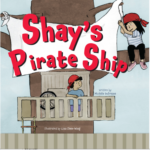
<p><strong><img class="alignleft" src="/assets/images/posts/2023/04/pirate-150x150.png" alt="" width="150" height="150" srcset="/assets/images/posts/2023/04/pirate-150x150.png 150w, /assets/images/posts/2023/04/pirate-300x300.png 300w, /assets/images/posts/2023/04/pirate-230x229.png 230w, /assets/images/posts/2023/04/pirate-350x349.png 350w, /assets/images/posts/2023/04/pirate-480x478.png 480w, /assets/images/posts/2023/04/pirate.png 763w" sizes="(max-width: 150px) 100vw, 150px" loading="lazy" decoding="async">Phonics Focus: </strong>Initial Digraph <i>sh</i></p>
<p>Have students remove the following letters from their trays: <em>a</em>, <em>f</em>,<em> h</em>,<em> i</em>,<em> n</em>,<em> o</em>,<em> p</em>, <em>s</em>, and <em>t</em><em>.</em></p>
<ul>
<li>
<em>Make the word:</em> fin.</li>
<li>
<em>Change the</em> f <em>to </em>sh <em>and read the word:</em> shin.</li>
<li>
<em>Make the word:</em> ship.</li>
<li>
<em>Change the</em> i <em>to</em> o <em>and read the word:</em> shop.</li>
<li>
<em>Make the word:</em> top.</li>
<li>
<i><em>Change the</em> </i>o<i> <em>to</em> </i>a <i><em>and read the word:</em> </i>tap<i>.</i>
</li>
</ul>
<p> </p>
<div></div>
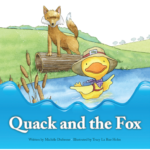
<p><strong><img class="alignleft" src="/assets/images/posts/2023/04/quack-150x150.png" alt="" width="150" height="150" loading="lazy" decoding="async">Phonics Focus:</strong> Initial Blend <em>sp</em></p>
<p>Have students remove the following letters from their trays: <em>h</em>,<em> i</em>,<em> n</em>,<em> o</em>,<em> p</em>, <em>s</em>,<em> t</em>, and <em>u</em>.</p>
<ul>
<li>
<em>Make the word:</em> spin.</li>
<li>
<em>Change the</em> n <em>to </em>t <em>and read the word:</em> spit.</li>
<li>
<em>Make the word:</em> spot.</li>
<li>
<em>Change the</em> sp <em>to</em> n <em>and read the word:</em> not.</li>
<li>
<em>Make the word:</em> shot.</li>
<li>
<em>Change the</em> o <em>to</em> u <em>and read the word:</em> shut.</li>
</ul>
<p> </p>
<p> </p>
<p> </p>
<p> </p>
<p> </p>
<p> </p>
<p> </p>
<p> </p>]]></content><author><name>Michèle Dufresne</name><email>ask-michele@pioneervalleybooks.com</email></author><category term="teaching-tips" /><category term="videos" /><summary type="html"><![CDATA[Making Words is an engaging word building activity that helps link your students’ knowledge of letter-sound relationships with phonemic awareness. If you have used this activity in the past, you know how much students learn from it, but I now recommend some changes in how the activity is done so students can practice both encoding and decoding skills. Going back and forth between encoding and decoding helps to create flexible word solvers and solidifies visual and auditory synchrony.]]></summary><media:thumbnail xmlns:media="http://search.yahoo.com/mrss/" url="https://www.micheledufresne.com/assets/images/posts/2023/04/Teaching-Tip-Blog-032423.jpg" /><media:content medium="image" url="https://www.micheledufresne.com/assets/images/posts/2023/04/Teaching-Tip-Blog-032423.jpg" xmlns:media="http://search.yahoo.com/mrss/" /></entry><entry><title type="html">Using Decodable Books to Teach Reading</title><link href="https://www.micheledufresne.com/2022/10/18/using-decodable-books-to-teach-reading/" rel="alternate" type="text/html" title="Using Decodable Books to Teach Reading" /><published>2022-10-18T14:27:57-04:00</published><updated>2022-10-18T14:27:57-04:00</updated><id>https://www.micheledufresne.com/2022/10/18/using-decodable-books-to-teach-reading</id><content type="html" xml:base="https://www.micheledufresne.com/2022/10/18/using-decodable-books-to-teach-reading/"><![CDATA[<p>When it comes to using decodable texts in the classroom, today’s educators are often divided. Many are advocating for using only decodable books to teach reading, while others say that they would never use decodable books. However, there is room for both decodable books <em>and</em> leveled books in our primary classrooms. Both kinds of books provide readers with important learning opportunities. Decodable books allow readers to practice phonics skills in the context of authentic reading, while leveled books are carefully sequenced to provide just the right amount of support and challenge to readers, along with opportunities to develop a rich vocabulary, background knowledge, and comprehension skills. A quality leveled reader also provides opportunities for building a sight vocabulary and decoding skills.</p>
<p><strong>What Makes a Book “Decodable”?</strong></p>
<!--more-->
<p>Heidi Anne Mesmer says, “Decodable text is a type of beginning reading material in which the words have been controlled to contain letter-sounds and high frequency words that the learner has been taught.” (2001) It is important to understand that while not all leveled books are decodable, many are. It just depends on what phonics skills and sight words students have been taught and have mastered.</p>
<p>When selecting a decodable book to use, it is important to consider the following:</p>
<ul>
<li><strong>Does the story make sense?</strong></li>
</ul>
<div>
<p>A story should always make sense and have natural-sounding language. The vocabulary in the story should fall within the range of most students’ oral and written vocabulary.</p>
</div>
<ul>
<li><strong>Will the story provide opportunities to practice new and previously taught phonics skills?</strong></li>
</ul>
<p>If you have just taught students short <em>o</em>, then your decodable book should have a number of short <em>o</em>words that provide students with opportunities to practice decoding short <em>o</em> words. But if you have already taught short <em>a</em> and<em> i</em>, then short vowel words with <em>a</em> and <em>i</em> words would also be considered decodable.</p>
<ul>
<li><strong>Will students enjoy reading the book?</strong></li>
</ul>
<p>Whether the book is a decodable or leveled book, the text should be something students will want to read again and again. Rereading provides opportunities to increase fluency. All good books for beginning readers need beautiful illustrations and photos, as well as storylines that engage students’ attention.</p>
<p><strong>Using Pioneer Valley Phonics Storybooks in a Purposeful Sequence</strong></p>
<p><a title="Phonics Storybooks" href="https://pioneervalleybooks.com/collections/pioneer-valley-phonics-storybooks" target="_blank" rel="noopener noreferrer">Phonics Storybooks</a>, the latest collection from Pioneer Valley Books, meets all three of these criteria. When used in a purposeful sequence, readers will have the opportunity to practice their decoding skills with texts that are textually engaging, visually exciting, and filled with natural sounding language.</p>
<p>Here is an example of a sequence that you might use: After you have taught the short <em>o</em> sound, have students read <em>The Sock</em>. This book provides many opportunities for students to read sight words they have been previously taught and to decode short <em>o</em> words. (<a title="Phonics Storybooks" href="https://pioneervalleybooks.com/collections/pioneer-valley-phonics-storybooks" target="_blank" rel="noopener noreferrer">Check out Pioneer Valley Storybooks</a>)</p>
<p><img src="https://cdn.shopify.com/s/files/1/0071/0960/7481/files/BlogSockImage.jpg?v=1665514201" alt="The Sock" loading="lazy" decoding="async"></p>
<p>Then you might teach short <em>u </em>and have students practice their new skill with <em>Fun in the Mud.</em></p>
<p><em><img src="https://cdn.shopify.com/s/files/1/0071/0960/7481/files/BlogFunMudImage.jpg?v=1665514207" alt="Fun in the Mud" loading="lazy" decoding="async"></em></p>
<p>After students have had opportunities to learn both the short <em>o</em> and short <em>u</em> sounds, you can use the book <em>Dot the Pug</em> to provide practice reading words with both the short <em>o</em> and short <em>u</em> sounds.</p>
<p><img src="https://cdn.shopify.com/s/files/1/0071/0960/7481/files/BlogDotPugImage.jpg?v=1665514211" alt="Dot the Pug" loading="lazy" decoding="async"></p>
<p>And here is a Level C reader, <em>A Dinosaur Snack</em>, that would partner up with these stories beautifully, providing opportunities for students to practice new decoding skills as well as vocabulary and comprehension.</p>
<p><img src="https://cdn.shopify.com/s/files/1/0071/0960/7481/files/BlogDinoSnackImage.jpg?v=1665514216" alt="Dinosaur Snack" loading="lazy" decoding="async"></p>
<p>*</p>
<p>Recently, I went to pick up my granddaughter Mae. She was sitting reading a book when I drove up. As she walked to the car, she said, “Meme, I might want to keep reading when I get to your house instead of playing with Papa, because my book is just so good.” Then she said, “You know, reading used to be a bit hard. But now it’s not. It’s just fun.”</p>
<p>I hope that every book I write is helping you foster readers who feel the same way as Mae! Our classrooms need to be filled with all kinds of books for children to read and enjoy. And our goal must be for all children to see reading not as something hard but instead as “just fun”!</p>
<p>For more on decodable books, I recommend <a title="Heidi Ann Mesmer blog post" href="https://blog.heinemann.com/fear-not-the-decodable-why-when-how" target="_blank" rel="noopener noreferrer">this blog post</a> from Heidi Ann Mesmer.</p>
<p> </p>
<p> </p>
<p> </p>]]></content><author><name>Michèle Dufresne</name><email>ask-michele@pioneervalleybooks.com</email></author><category term="new-at-pioneer-valley-books" /><summary type="html"><![CDATA[When it comes to using decodable texts in the classroom, today’s educators are often divided. Many are advocating for using only decodable books to teach reading, while others say that they would never use decodable books. However, there is room for both decodable books and leveled books in our primary classrooms. Both kinds of books provide readers with important learning opportunities. Decodable books allow readers to practice phonics skills in the context of authentic reading, while leveled books are carefully sequenced to provide just the right amount of support and challenge to readers, along with opportunities to develop a rich vocabulary, background knowledge, and comprehension skills. A quality leveled reader also provides opportunities for building a sight vocabulary and decoding skills. What Makes a Book “Decodable”?]]></summary><media:thumbnail xmlns:media="http://search.yahoo.com/mrss/" url="https://www.micheledufresne.com/assets/images/posts/2022/10/BlogHeader-Phonics.jpg" /><media:content medium="image" url="https://www.micheledufresne.com/assets/images/posts/2022/10/BlogHeader-Phonics.jpg" xmlns:media="http://search.yahoo.com/mrss/" /></entry><entry><title type="html">Teaching Tip: Reading Goals!</title><link href="https://www.micheledufresne.com/2022/09/01/teaching-tip-reading-goals/" rel="alternate" type="text/html" title="Teaching Tip: Reading Goals!" /><published>2022-09-01T19:52:46-04:00</published><updated>2022-09-01T19:52:46-04:00</updated><id>https://www.micheledufresne.com/2022/09/01/teaching-tip-reading-goals</id><content type="html" xml:base="https://www.micheledufresne.com/2022/09/01/teaching-tip-reading-goals/"><![CDATA[<p>I am thrilled with the newest Digital Reader feature: Reading Goals. When we first built the Digital Reader (<a class="c-link" tabindex="-1" href="http://digitalreader.com/" target="_blank" rel="noopener noreferrer" data-stringify-link="http://digitalreader.com" data-sk="tooltip_parent" data-remove-tab-index="true" aria-describedby="sk-tooltip-1203">digitalreader.com</a>), we were thinking about a simple platform that could help teachers access books remotely. We did not imagine it would become such an important resource for you now that you are back in your classrooms!</p>
<p> We know how important it is for kids to read, read, and read more books. The strongest correlation to becoming a proficient reader is the amount of reading a student does. In a recent efficacy study carried out on the Digital Reader, researchers found that the Kindergarten and Grade 1 students who read more books on the Digital Reader performed better on their district reading assessment (<a title="McREL Tech 2022 study" href="https://cdn.shopify.com/s/files/1/0071/0960/7481/files/McREL-Tech-Eval-Brief_Digital-Reader_Jan2022.pdf?v=1662041939" target="_blank" rel="noopener noreferrer">see the study here</a>). We believe the new Reading Goals feature will help you keep students reading every day. With this newest feature, you can set a weekly, monthly, or even yearly goal of books read to encourage your students to use their independent time for reading. We also think it will help encourage students to read at home with family members and caregivers. And there are some fun features like animated badges that will reward students’ efforts when they meet their goals!</p>
<!--more-->
<p>So check out the newest Reading Goals feature, and let us know how it is working for you and your students!</p>]]></content><author><name>Michèle Dufresne</name><email>ask-michele@pioneervalleybooks.com</email></author><category term="teaching-tips" /><category term="reading" /><category term="teaching-tips" /><summary type="html"><![CDATA[I am thrilled with the newest Digital Reader feature: Reading Goals. When we first built the Digital Reader (digitalreader.com), we were thinking about a simple platform that could help teachers access books remotely. We did not imagine it would become such an important resource for you now that you are back in your classrooms!  We know how important it is for kids to read, read, and read more books. The strongest correlation to becoming a proficient reader is the amount of reading a student does. In a recent efficacy study carried out on the Digital Reader, researchers found that the Kindergarten and Grade 1 students who read more books on the Digital Reader performed better on their district reading assessment (see the study here). We believe the new Reading Goals feature will help you keep students reading every day. With this newest feature, you can set a weekly, monthly, or even yearly goal of books read to encourage your students to use their independent time for reading. We also think it will help encourage students to read at home with family members and caregivers. And there are some fun features like animated badges that will reward students’ efforts when they meet their goals!]]></summary><media:thumbnail xmlns:media="http://search.yahoo.com/mrss/" url="https://www.micheledufresne.com/assets/images/posts/2022/09/TeachingTip-DR-Blog.png" /><media:content medium="image" url="https://www.micheledufresne.com/assets/images/posts/2022/09/TeachingTip-DR-Blog.png" xmlns:media="http://search.yahoo.com/mrss/" /></entry><entry><title type="html">When Are Leveled Books Also Decodable Books?</title><link href="https://www.micheledufresne.com/2022/08/16/when-are-leveled-books-also-decodable-books/" rel="alternate" type="text/html" title="When Are Leveled Books Also Decodable Books?" /><published>2022-08-16T16:13:38-04:00</published><updated>2022-08-16T16:13:38-04:00</updated><id>https://www.micheledufresne.com/2022/08/16/when-are-leveled-books-also-decodable-books</id><content type="html" xml:base="https://www.micheledufresne.com/2022/08/16/when-are-leveled-books-also-decodable-books/"><![CDATA[<p>There have been many recent articles of late regarding the push for using decodable texts for reading instruction. Many districts are requiring a shift away from leveled readers toward decodable books.</p>
<p>But what makes a book “decodable”?</p>
<p>Many books that are labeled “decodable” follow a scope and sequence for introducing letters and sounds. Commonly, the sequence involves teaching consonant sounds, short vowels, digraphs, blends, long vowels, and vowel teams. Most of the words in a given decodable book feature sounds that have been previously introduced. These texts are, of course, leveled in their own way. Simply put, books with short-vowel words are easier to read than books with vowel-team words.</p>
<p></p>
<!--more-->
<p>Many books that are considered “leveled” are also sequenced by decoding challenges. The only difference is that they are not written around a particular sound. Rather, leveled books, like many of those published by Pioneer Valley Books, are written with a careful sequence of sight words, decodable words, and interesting vocabulary that is supported by the pictures or the context of the story.</p>
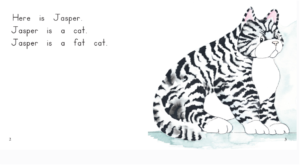
<p>Here is an example from <em>Jasper the Fat Cat</em> at Level C.</p>
<p><img class="alignleft" src="/assets/images/posts/2022/08/jasper-300x165.png" alt="" width="300" height="165" srcset="/assets/images/posts/2022/08/jasper-300x165.png 300w, /assets/images/posts/2022/08/jasper-768x422.png 768w, /assets/images/posts/2022/08/jasper-1024x563.png 1024w, /assets/images/posts/2022/08/jasper-830x456.png 830w, /assets/images/posts/2022/08/jasper-230x126.png 230w, /assets/images/posts/2022/08/jasper-350x192.png 350w, /assets/images/posts/2022/08/jasper-480x264.png 480w, /assets/images/posts/2022/08/jasper.png 1161w" sizes="(max-width: 300px) 100vw, 300px" loading="lazy" decoding="async">On this page, <em>is</em>,<em> a</em>,<em> cat</em>, and <em>fat </em>are all decodable words, and <em>here </em>is a sight word used in many Level C texts from Pioneer Valley Books. The book features a cat named Jasper, which is a character that shows up in many of our books. But a decodable book would never name a cat Jasper. In a decodable book, Jasper’s name might be Sam or Pat. Yet in my experience, most young readers will recognize the name Jasper once they are familiar with the character. The recognizable illustration of the character makes the word “Jasper” accessible to young readers.</p>
<p>Along with opportunities for students to practice decoding skills, it is important for students to develop vocabulary. This is something leveled books often do that decodable books do not. Vocabulary plays an important role in comprehension.</p>
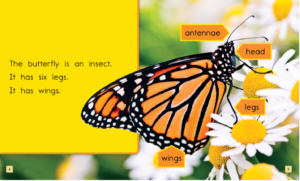
<p>Here is an example from <em>Monarch Butterflies</em> at Level D.</p>
<p><img class="alignleft" src="/assets/images/posts/2022/08/butterfly-300x181.png" alt="" width="300" height="181" srcset="/assets/images/posts/2022/08/butterfly-300x181.png 300w, /assets/images/posts/2022/08/butterfly-768x462.png 768w, /assets/images/posts/2022/08/butterfly-1024x617.png 1024w, /assets/images/posts/2022/08/butterfly-830x500.png 830w, /assets/images/posts/2022/08/butterfly-230x138.png 230w, /assets/images/posts/2022/08/butterfly-350x211.png 350w, /assets/images/posts/2022/08/butterfly-480x289.png 480w, /assets/images/posts/2022/08/butterfly.png 1430w" sizes="(max-width: 300px) 100vw, 300px" loading="lazy" decoding="async">On this page, there are lots of decodable words: <em>is</em>, <em>an</em>, <em>it</em>, <em>has</em>, <em>six</em>, <em>legs</em>, and <em>wings</em>. But the addition of non-decodable vocabulary provides an opportunity to learn something about butterflies!</p>
<p>Our brains are designed to help us see patterns. When we use text that doesn’t completely limit words beyond those that have been taught, many readers will naturally begin to pick up the patterns in words. For example, you would not teach students the <em>oo</em> pattern until much later in a phonics sequence, but I have seen many children able to read the words <em>cook </em>and <em>took</em>, all because they can read the word <em>look</em>.</p>
<p>Literacy expert Tim Shanahan tells us: “It is so important that we not overly constrain the decodability of the texts that young children read….I recommend using a combination of both highly decodable texts and controlled vocabulary readers. We want kids actively looking to see spelling patterns, including ones that have not been taught.”</p>
<p>Read the summary of the research here: <a href="https://www.readingrockets.org/blogs/shanahan-literacy/how-decodable-do-decodable-texts-need-be-what-we-teach-when-we-teach-phonics">https://www.readingrockets.org/blogs/shanahan-literacy/how-decodable-do-decodable-texts-need-be-what-we-teach-when-we-teach-phonics</a></p>
<p>Leveled books CAN provide students with opportunities to practice their decoding skills…and so much more!</p>]]></content><author><name>Michèle Dufresne</name><email>ask-michele@pioneervalleybooks.com</email></author><category term="uncategorized" /><summary type="html"><![CDATA[There have been many recent articles of late regarding the push for using decodable texts for reading instruction. Many districts are requiring a shift away from leveled readers toward decodable books. But what makes a book “decodable”? Many books that are labeled “decodable” follow a scope and sequence for introducing letters and sounds. Commonly, the sequence involves teaching consonant sounds, short vowels, digraphs, blends, long vowels, and vowel teams. Most of the words in a given decodable book feature sounds that have been previously introduced. These texts are, of course, leveled in their own way. Simply put, books with short-vowel words are easier to read than books with vowel-team words.]]></summary><media:thumbnail xmlns:media="http://search.yahoo.com/mrss/" url="https://www.micheledufresne.com/assets/images/posts/2022/08/081122-Blog_1200x614.jpg" /><media:content medium="image" url="https://www.micheledufresne.com/assets/images/posts/2022/08/081122-Blog_1200x614.jpg" xmlns:media="http://search.yahoo.com/mrss/" /></entry><entry><title type="html">Teaching Tip: Shared Reading in Kindergarten</title><link href="https://www.micheledufresne.com/2022/04/06/teaching-tip-shared-reading-in-kindergarten/" rel="alternate" type="text/html" title="Teaching Tip: Shared Reading in Kindergarten" /><published>2022-04-06T14:30:33-04:00</published><updated>2022-04-06T14:30:33-04:00</updated><id>https://www.micheledufresne.com/2022/04/06/teaching-tip-shared-reading-in-kindergarten</id><content type="html" xml:base="https://www.micheledufresne.com/2022/04/06/teaching-tip-shared-reading-in-kindergarten/"><![CDATA[<p>Shared reading provides a wonderful opportunity to guide and support students as they read aloud together from a large version of text. Our kindergarten students enter school with a wide variety of experiences with books and print. Some may already be readers, while others may have only a little knowledge of letters, sounds, words, and/or early concepts of print. As we bring them together to share a book, there will be different learning opportunities, but it is important that all students are engaged.</p>
<p>Here are some tips to ensure an engaging shared reading experience for all your students.</p>
<p></p>
<!--more-->
<ul>
<li>As you read the book and point to each word, keep your pace natural but slow enough for all readers to read with you.</li>
<li>Echo read passages students find more challenging, and choral read less challenging sections.</li>
<li>Stop several times during the reading and use the questions provided to engage students and allow them to share their thinking.</li>
</ul>
<p>Rather than giving separate lessons in phonics and phonological awareness, shared reading can be the perfect place to integrate this instruction and ensure students apply their new learning. For example, we love using large letter cards for learning new sight words and making words. <a href="https://player.vimeo.com/video/686302022" target="_blank" rel="noopener noreferrer">Watch Jan Richardson</a> work with a group learning to manipulate sounds to make new words.</p>
<p>Are you looking to add more decodable texts into your teaching? I prefer to call them controlled texts, since at its core, all text is decodable. Shared reading is the perfect time to use controlled text! Make your own by writing some simple sentences using the phonics skill you have been teaching, along with the sight words your students know! Once you have your story, you can project it onto the screen for shared reading. <a href="https://s3.amazonaws.com/assets.literacyfootprints.com/sr/kindergarten/shared-reading-super-stories-kindergarten-module-4-3-the-pot.pdf" target="_blank" rel="noopener noreferrer">Here is a link</a> to a controlled text for short <em>o</em> words from our new Stepping Together Shared Reading Kindergarten kit.</p>
<p>Through the shared reading experience, all students have an opportunity to gain confidence and motivation for reading and writing.</p>]]></content><author><name>Michèle Dufresne</name><email>ask-michele@pioneervalleybooks.com</email></author><category term="literacy-footprints" /><category term="teaching-tips" /><category term="videos" /><category term="guided-reading" /><category term="shared-reading" /><summary type="html"><![CDATA[Shared reading provides a wonderful opportunity to guide and support students as they read aloud together from a large version of text. Our kindergarten students enter school with a wide variety of experiences with books and print. Some may already be readers, while others may have only a little knowledge of letters, sounds, words, and/or early concepts of print. As we bring them together to share a book, there will be different learning opportunities, but it is important that all students are engaged. Here are some tips to ensure an engaging shared reading experience for all your students.]]></summary><media:thumbnail xmlns:media="http://search.yahoo.com/mrss/" url="https://www.micheledufresne.com/assets/images/posts/2022/04/040122-Teaching-Tip-Blog.jpg" /><media:content medium="image" url="https://www.micheledufresne.com/assets/images/posts/2022/04/040122-Teaching-Tip-Blog.jpg" xmlns:media="http://search.yahoo.com/mrss/" /></entry><entry><title type="html">Teaching Tip: Guided Writing: A Critical Part of Guided Reading</title><link href="https://www.micheledufresne.com/2021/11/22/teaching-tip-guided-writing-a-critical-part-of-guided-reading/" rel="alternate" type="text/html" title="Teaching Tip: Guided Writing: A Critical Part of Guided Reading" /><published>2021-11-22T19:28:07-05:00</published><updated>2021-11-22T19:28:07-05:00</updated><id>https://www.micheledufresne.com/2021/11/22/teaching-tip-guided-writing-a-critical-part-of-guided-reading</id><content type="html" xml:base="https://www.micheledufresne.com/2021/11/22/teaching-tip-guided-writing-a-critical-part-of-guided-reading/"><![CDATA[<p>by Amy Bowlin</p>
<p>When we talk about guided reading, we don’t often think about writing being an important part of the lesson—but it is! Embedded in every Literacy Footprints lesson is an opportunity for students to write about what they read. Writing plays an important role in building students’ literacy skills. Unfortunately, in the hectic schedule of our school day, sometimes guided writing gets placed on the back burner.</p>
<p></p>
<!--more-->
<p>Michèle Dufresne and Jan Richardson have explained that guided writing is “assisted writing, not assigned writing.” Just like we support students as they read a new book for the first time, during guided writing we <em>guide</em> students as they write about the book. The power of partnering writing and reading in the small-group lesson is often referred to as <em>reciprocity</em>. What students learn while writing can be applied to reading and vice versa. Through guided writing, we can deepen students’ understanding about the text, apply word study/phonics instruction we taught during the lesson, and help students develop writing skills. In this small-group setting, we also can more easily meet individual needs.</p>
<p>Let’s review how this works out practically:</p>
<p>Let’s take the book <em>The Fisherman and the Golden Fish</em>, Level J, Lesson 122 (Intervention Partner Kit) as an example. The focus for comprehension is to retell the key ideas and details. Using the Fairy-Tale Characteristics card prompts, students craft their writing to reflect the key elements of what they read the day before. They will use special phrases like <em>Once upon a time</em> or <em>Long ago</em>. Then students retell the story, describing the characters, problem/solution, and key details.</p>
<p>As students develop from Emergent to Fluent readers, they learn to respond through writing in more sophisticated ways: analyzing characters, asking and answering questions, summarizing, and more. Writing is one of the highest forms of communication, and using guided writing to help students develop their literacy skills has far-reaching benefits.</p>
<p><strong><u>Resources</u></strong></p>
<p>Mary D. Fried (2006), <em><span class="link-rot" data-dead-href="http://www.literacylearning.net/uploads/3/7/8/8/37880553/reciprocity_fried_article.pdf">Reciprocity: Promoting the Flow of Knowledge for Learning to Read and Write</span><span class="link-rot-note"> (link no longer available)</span></em></p>]]></content><author><name>Michèle Dufresne</name><email>ask-michele@pioneervalleybooks.com</email></author><category term="literacy-footprints" /><category term="teaching-tips" /><category term="guided-writing" /><summary type="html"><![CDATA[by Amy Bowlin When we talk about guided reading, we don’t often think about writing being an important part of the lesson—but it is! Embedded in every Literacy Footprints lesson is an opportunity for students to write about what they read. Writing plays an important role in building students’ literacy skills. Unfortunately, in the hectic schedule of our school day, sometimes guided writing gets placed on the back burner.]]></summary><media:thumbnail xmlns:media="http://search.yahoo.com/mrss/" url="https://www.micheledufresne.com/assets/images/posts/2021/11/111821-TeachingTipBlog.jpg" /><media:content medium="image" url="https://www.micheledufresne.com/assets/images/posts/2021/11/111821-TeachingTipBlog.jpg" xmlns:media="http://search.yahoo.com/mrss/" /></entry><entry><title type="html">Teaching Tip: Understanding the Purpose of Level A and B Books</title><link href="https://www.micheledufresne.com/2021/08/11/teaching-tip-understanding-the-purpose-of-level-a-and-b-books/" rel="alternate" type="text/html" title="Teaching Tip: Understanding the Purpose of Level A and B Books" /><published>2021-08-11T16:22:27-04:00</published><updated>2021-08-11T16:22:27-04:00</updated><id>https://www.micheledufresne.com/2021/08/11/teaching-tip-understanding-the-purpose-of-level-a-and-b-books</id><content type="html" xml:base="https://www.micheledufresne.com/2021/08/11/teaching-tip-understanding-the-purpose-of-level-a-and-b-books/"><![CDATA[<p>As we get ready to launch a new batch of emergent readers–hopefully, this year <em>in </em>school and not remotely–I think it is a good time to consider the purpose of the early-level books we use for instruction. I suspect critics of leveled books misunderstand their purpose. We need to do a better job of explaining to parents and other concerned people how we use these books as well as <em>why.</em></p>
<p></p>
<!--more-->
<p>If you are a kindergarten or first grade teacher, you have children entering your classroom who know very few letters and sounds. Or you may have students who have limited English in your classroom. When I was a young teacher, we did not put books in children’s hands until they knew their letters and sounds. But extensive research on emergent readers has helped us learn that children should be developing new knowledge in many aspects of reading and writing at the same time. A considerable amount of letter learning occurs as children read books and write stories. Also, we have learned that letters embedded within words are more challenging than learning a letter in isolation; this helps to develop solid and flexible letter knowledge. <em>And </em>we also have learned that children’s engagement, enthusiasm, and most importantly, confidence, comes from reading real books!</p>
<p>Level A and B books are designed to help students build foundational learning. They help children learn to:</p>
<ul>
<li>attend to some features of print (that print is what we read, the difference between a word and a letter, where to look for the first and last letter)</li>
<li>learn about the direction of print (left page before right, top to bottom on a page, left to right across a line of print, return to the left of the next line)</li>
<li>use spaces to control attention to words</li>
<li>attend to letters in a word in a left-to-right sequence</li>
<li>understand that illustrations correspond with print</li>
<li>understand that letters and words hold meaning</li>
<li>develop one-to-one correspondence</li>
</ul>
<p>All these early concepts of print are crucial for helping students build a successful processing system.</p>
<p>Let’s look at this example from a Level A book, <em>Daisy the Pirate</em>.</p>
<p><img src="https://cdn.shopify.com/s/files/1/0071/0960/7481/files/pirate_480x480.png?v=1628698400" alt="" loading="lazy" decoding="async"></p>
<p>Some critics would say we are asking children to guess that it is a pirate <strong>hat</strong>. But reading <em>pirate hat</em> is only the tiniest part of what is going on here as a child reads this page. We use this simple text with an engaging and clear illustration because the child is learning how books work. As they match their finger to each word and read the patterned text, they are learning to look at the words and understand how the spaces work and how to move left to right across the page. And yes, they are learning how to make an educated guess that the word is <em>hat</em> (because there is a picture of a hat and the word starts with an <em>h</em>). We do not expect the emergent reader to be able to sound out /h/-/a/-/t/ because it is unlikely that they even know all those sounds at this point.</p>
<p>Let’s look at this Level B book, <em>Porcupine is Hiding</em>.</p>
<p><img src="https://cdn.shopify.com/s/files/1/0071/0960/7481/files/porcupine_480x480.png?v=1628698546" alt="" loading="lazy" decoding="async"></p>
<p>We certainly do not expect an emergent reader to figure out the word <em>porcupine</em>. Here, the emergent reader has an opportunity to learn how to move left to right and then how to move to the next line and start at the left again. They are still consolidating one-to-one correspondence and using the illustration to consider what would make sense.</p>
<p>Here is another Level B book, <em>Mother Animals</em>.</p>
<p><img src="https://cdn.shopify.com/s/files/1/0071/0960/7481/files/puppy_480x480.png?v=1628698578" alt="" loading="lazy" decoding="async"></p>
<p>Here, the emergent reader is learning how to move from the left page to the right page.</p>
<p>Once children learn these early concepts of print, we need to move them quickly out of the patterned text so they can develop more complex processing skills, including how to decode new words.</p>
<p>Wishing you a safe and happy school year!</p>
<p>Michèle</p>]]></content><author><name>Michèle Dufresne</name><email>ask-michele@pioneervalleybooks.com</email></author><category term="teaching-tips" /><category term="guided-reading" /><category term="teaching-tips" /><summary type="html"><![CDATA[As we get ready to launch a new batch of emergent readers–hopefully, this year in school and not remotely–I think it is a good time to consider the purpose of the early-level books we use for instruction. I suspect critics of leveled books misunderstand their purpose. We need to do a better job of explaining to parents and other concerned people how we use these books as well as why.]]></summary><media:thumbnail xmlns:media="http://search.yahoo.com/mrss/" url="https://www.micheledufresne.com/assets/images/posts/2021/08/081121-TeachingTip_Blog.jpg" /><media:content medium="image" url="https://www.micheledufresne.com/assets/images/posts/2021/08/081121-TeachingTip_Blog.jpg" xmlns:media="http://search.yahoo.com/mrss/" /></entry></feed>